
Situation: Of 102 vegetable and fruit farmers in the Northeast that responded to a 2021 survey, 94% were interested in learning practices to enhance pollinator habitat, and 59% were interested in financial assistance for such practices. In response, a comprehensive educational program was conducted to promote practices in Vermont that supported pollinators including habitat plantings, improved management of cover crops, tillage, mulching, mowing, and avoiding pesticide harm to pollinators. Information was provided on obtaining National Resources Conservation Service (NRCS) assistance to adopt practices.
Outcomes: This project, led by Vernon Grubinger and his team at the University of Vermont, helped vegetable and fruit farmers adopt practices that supported insect pollinators, reduced the risk of lower yield and improved quality in high-value crops. Over 1,000 farmers were engaged through a website, three conference presentations, 10 on-farm workshops, 5 webinars, and 155 of these farmers received individual consultations. This project also exceeded the goal of materials produced by creating 5 fact sheets, one press release, and 10 Vermont Vegetable and Berry Grower newsletter reports on pollinator activity in crops. Additionally, the team was able to collaborate with Vermont’s premier wild bee expert at the Vermont Ecosystems Center as well as leveraging resources from the University of Vermont Gund Institute’s Apis Fund in order to create an additional 7 guides for growers (“Know Your 5”series) that identified common crop- specific pollinators and action items to support them in farm habitats.
Impacts: As a result of this project, forty-six farmers documented adoption of new practices and 12 farms participated in trials of cover crop mixes intended to provide season-long floral resources for pollinators. In addition, an on-line tool was developed for creating Pollinator Support Plans. Nineteen farms with an estimated annual crop sales totaling $3.2 million used the on-line tool to draft pollinator support plans. NRCS reported that 58 farms obtained their support for establishment of pollinator habitats on a total of 34 acres,
of which 13 acres have already been certified.
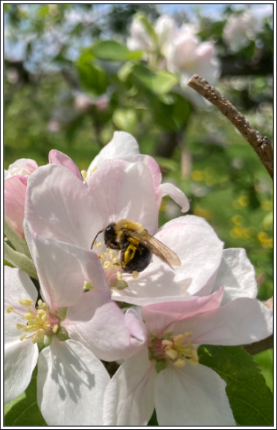
“I discovered more
natural pollinators
on my property when
the UVM extension
pollinator support person
pointed them out as we
walked my property”– Vermont Farmer