Overcoming Risk During Climate Variability:
The Importance of Recordkeeping in Small Scale Farming
Project Director: Jennifer Hashley – Trustees of Tufts College

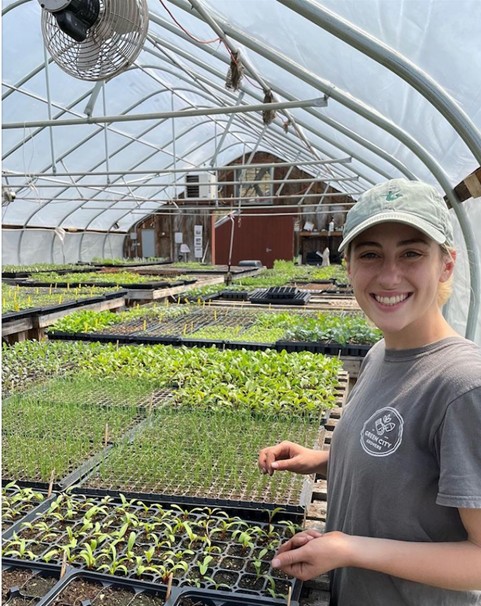
“I’ve been worried about taking on a loan this season to help me build infrastructure at my farm’s new location. Fortunately, the
Technical Assistance received helped me understand if I could afford to take on an operating loan this season to buy a cooler
and a Jang seeder. I then applied to Coastal Enterprise, Inc and was awarded a loan for $15,000!”
– Northeast Producer
Situation: Mitigating risk, particularly across the interrelated production, marketing, and financial arenas, is an important skill for small-scale specialty crop producers, particularly when they face climate variability. Understanding the dynamics of a business and making decisions to mitigate risks requires accurate and relevant data. Yet, record keeping is undoubtedly a least favorite farm activity. The goal of this project, led by Jennifer Hashley and her team at both New Entry and Trustees of Tufts College, was to aid new producers to develop a culture of record-keeping, build financial analysis skills to assess overall economic viability and financial health of their farm business, and increase participation in federal farm programs.
Over the course of the project, six training sessions, six farmer-to-farmer learning circles, access to The Farmers’ Office (online business planning and record-keeping tools), and individual coaching sessions were offered. A total of 185 producers actively participated in the project, including 112 who engaged with the workshop series and 73 in the Farmer Learning Circles. Additionally, 86 farmers received 408.2 hours of technical assistance and 26 farmers accessed the Farmers Office learning resources.
Outcome: Northeast small-scale, beginning, and specialty crop producers were advised on how to assess and analyze production, marketing, and financial risks through improved record-keeping and data management practices. Producer outcomes included: improved production data collection practices and management decisions; market channel assessments; improved farm financial record-keeping and enterprise analysis; and increased understanding of overall business health in the face of climate risks. Producers also better understood the benefit of and readiness along with eligibility needed for federal farm safety net programs.
Impact: In 2021, after completing the New Entry’s Farm Business Planning Course, an aspiring new farmer launched an agribusiness venture at the New Entry Incubator Farm, with a mission to grow food that supplies fresh produce to a CSA program, a local farmers market, and wholesale partners like the New Entry Food Hub. By 2023, after graduating from the New Entry Incubator Farm Training Program, they secured a long-term land lease in South Portland, Maine. The personalized technical assistance and workshops offered by New Entry enabled a smooth transition from the incubator site and facilitated the scaling of operations. This targeted support helped refine climate risk mitigation strategies and enhance the farm’s resilience. Through successful funding from the USDA NRCS Environmental Quality Incentives Program (EQIP), two high tunnels were installed at their new farm location in Maine. These structures protect crops from unpredictable weather, extend the growing season, and improve productivity. This journey demonstrates the transformative power of record-keeping as a tool to navigate climate uncertainty. With USDA funding, data has been converted into actionable strategies, allowing this farmer to thrive amid climate challenges and serve as an inspiring example of how small-scale farms can adapt and succeed in a changing environment.