
Situation: In 2022, Vernon Grubinger and his extension team at the University of Vermont, evaluated cover crop mixes on 12 vegetable farms in Vermont and New Hampshire to support pollinators with season-long floral resources. The team learned that seeding a mix of species was challenging due to different seed sizes. Farms had uneven establishment and poor, weedy stands; additionally failing to provide season-long flowers because some cover crop species were out-competed by others. Single species cover crop plantings appear to be lower risk and provide pollinators flowers and soil stability. Furthermore, their short growing period fits into existing farm crop rotation plans aimed at keeping soil covered when cash crops are absent, building soil organic matter, and reducing risk of erosion.
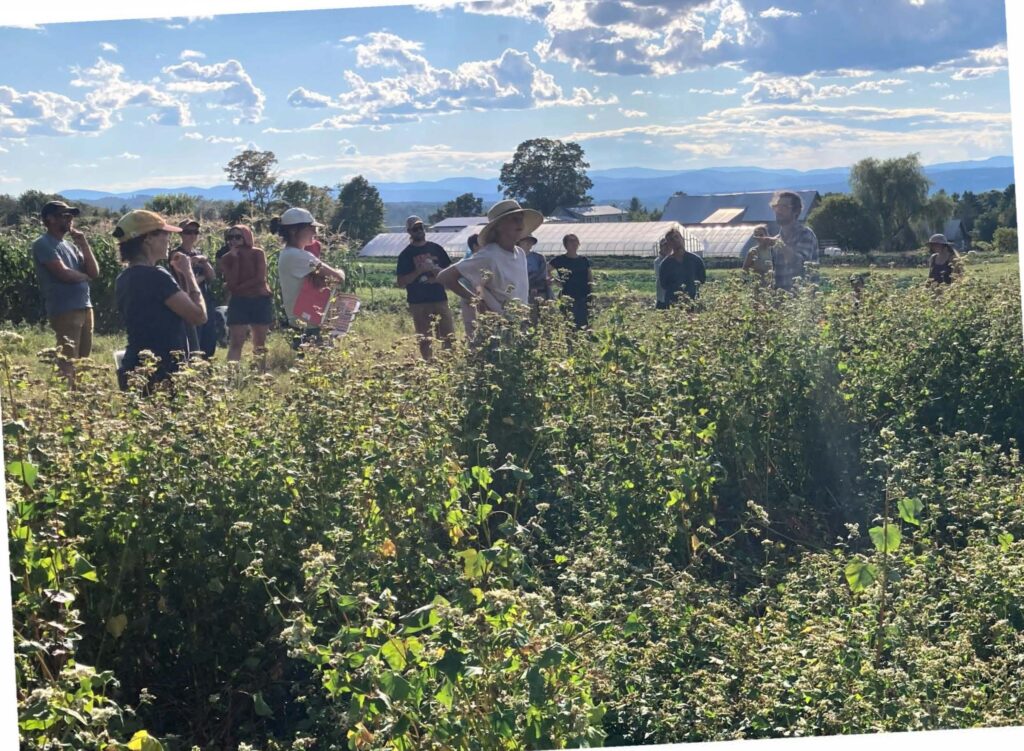
Outcomes: The partnerships with the Vermont Vegetable and Berry Growers Association, Farm Service Agency (FSA), Natural Resources Conservation Service (NRCS), and growers helped reach our target audience, commercial vegetable farms. During this project, 78 farmers directly engaged by sowing flowering cover crops and 450 others expressed interest in the practice after exposure to educational materials and/or attending outreach activities which were: a conference presentation, 11 on-farm workshops, 3 webinars, and 85 individual consultations. The Vermont Vegetable and Berry Grower e-newsletter reached 1,025 farmers and service providers with information generated during the project, specifically, observed pollinator activity in flowering cover crops during the growing season. Eight farmers engaged in pollinator habitat design planning using an on-line tool developed by the project team and documented their adoption of pollinator support practices.
Impacts: A new partnership with NRCS personnel was established that is expected to increase applications and funding awarded for establishment of pollinator habitat. During the two years of the project, 3708.5 pounds of certified organic cover crop seed, enough to cover more than 35 acres of land, was delivered to participating farmers, free of charge. Education regarding NAP disaster coverage, including the free coverage option for beginning, limited resource, socially disadvantaged, and veteran farmers, was provided to 50 farms. Ultimately, 27 farms implemented cover crop sequences and documented their performance.
“It is great that the Extension vegetable team is focusing on pollination. We depend way more on wild pollinators than I understood years ago. Without managing habitat and practices that are at least pollinator neutral, we would suffer serious yield reduction in our pollinator dependent crops.”
-Vermont Producer