
Project Director: Paul Goeringer – University of Maryland
“Thank you for the well-
written and clear resources.
I appreciated how well the
materials were prepared
and with examples to
help the reader to better
understand the issues.”
– Boonesboro workshop
participant
SITUATION: Rural areas in Maryland continued to see pressure from residents relocating to those areas from the urban areas. Many of these new residents may not have understood the agricultural practices that they were starting to see. Due to these pressures, many agricultural operators often had questions related to right-to-farm laws, recreational use, trespassing, and liability. At the same time, many of these new rural landowners began to ask questions related to legal concerns from the operations neighboring them, for example right-to-farm laws. With Maryland being more heavily regulated when it comes to agriculture than neighboring states, legal issues are often top concerns for Maryland agriculture operations. Additionally, a 2019 needs assessment of 612 Maryland agricultural stakeholders,
including 317 agricultural producers and 130 rural landowners, identified that additional information about land use/property rights (58 percent), nuisance/right-to-farm (47 percent), estate planning (57 percent), and lease agreements (39 percent) were wanted. Most respondents indicated that the best information sources were either a county Extension educator or an in-person workshop.
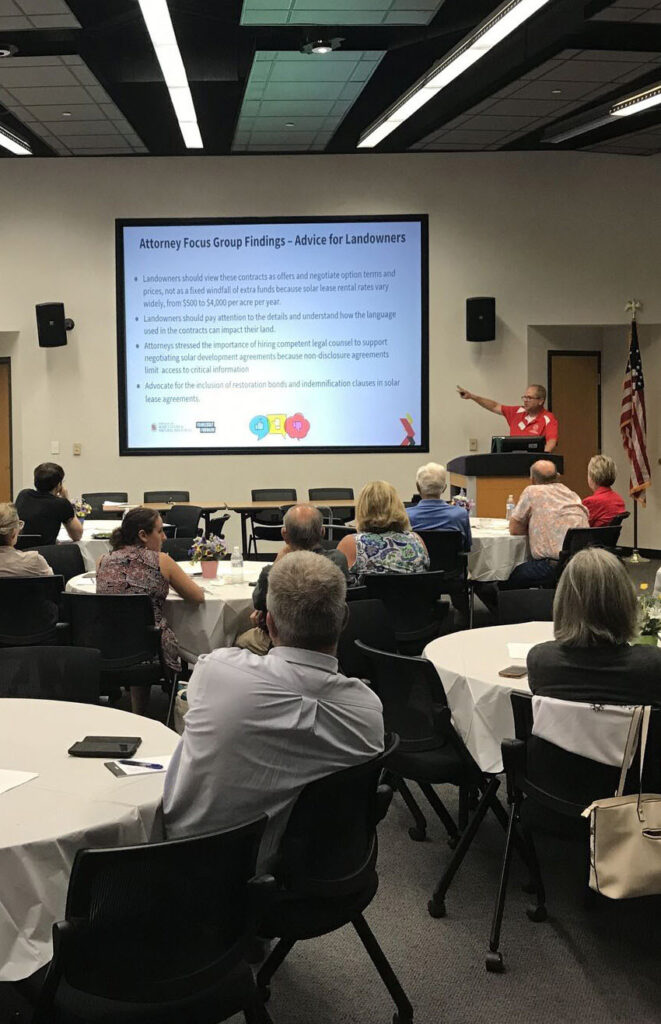
OUTCOME: This project, led by Paul Goeringer and his team at the University of Maryland, sought to educate both new rural landowners and existing agricultural operators. In light of COVID-19 and the general acceptance by many to pivot to online learning platforms, they developed online learning modules around these topics for landowners to complete at their own pace. Recognizing that learning styles are different, they also hosted three half-day programs covering the most critical issues. Topics for the workshops
and online learning modules included the importance of written leases, estate planning early on and how to protect one’s operation from liability. Although specifically focused on new rural landowners who have (or will) purchase or inherit property, this project provided useful information about any rural landowner’s legal considerations, regardless of ownership length. Between the online and in-person workshops, there were a total of 284 participants whom now understand the importance of written lease agreements and terms to consider when drafting land leases. Fourteen participants developed legal risk management plans based on knowledge gained from training. Lastly, 14 participants implemented a farm succession plan.
IMPACT: An unexpected outcome was the high participation at the in-person workshops. Since this project was designed after COVID-19, it was anticipated that the online course would be more popular. The other unexpected result was based on attendance at workshops, they
were able to expose larger audiences to estate planning and
succession planning information. The key to success for this project was the format and methods used to appeal to the broad set of
participants. Additionally, a needs assessment helped them know to
focus on legal issues. This resulted in more productive and enjoyable
workshops, webinars and online courses.